


Welcome Rachel, Ronald, Brad, Chris, Stephanie, Paul and the others who subscribed this week. This newsletter is free so please support me by forwarding it to someone else who would find it helpful. They can subscribe here.
Recent videos:
Last month I wrote about the Actionable Middle: AI-native startups reining in their promises while SaaS companies worked to be seen as more than a dashboard. Since publishing the chart, I’ve been seeing it everywhere.

Whether you’re building an AI-native product or not, we’re all selling in the AI era, and the way we talk to buyers has to keep up. This piece builds on the original research with some immediately useful insights on positioning and messaging.
Take these two ads from Fireflies, the AI meeting notetaker. The first promotes that “AI agents can now join your meetings.” The second attacks the underlying problem instead: “There’s a specific kind of tired that isn’t from doing work. It’s from holding work.”
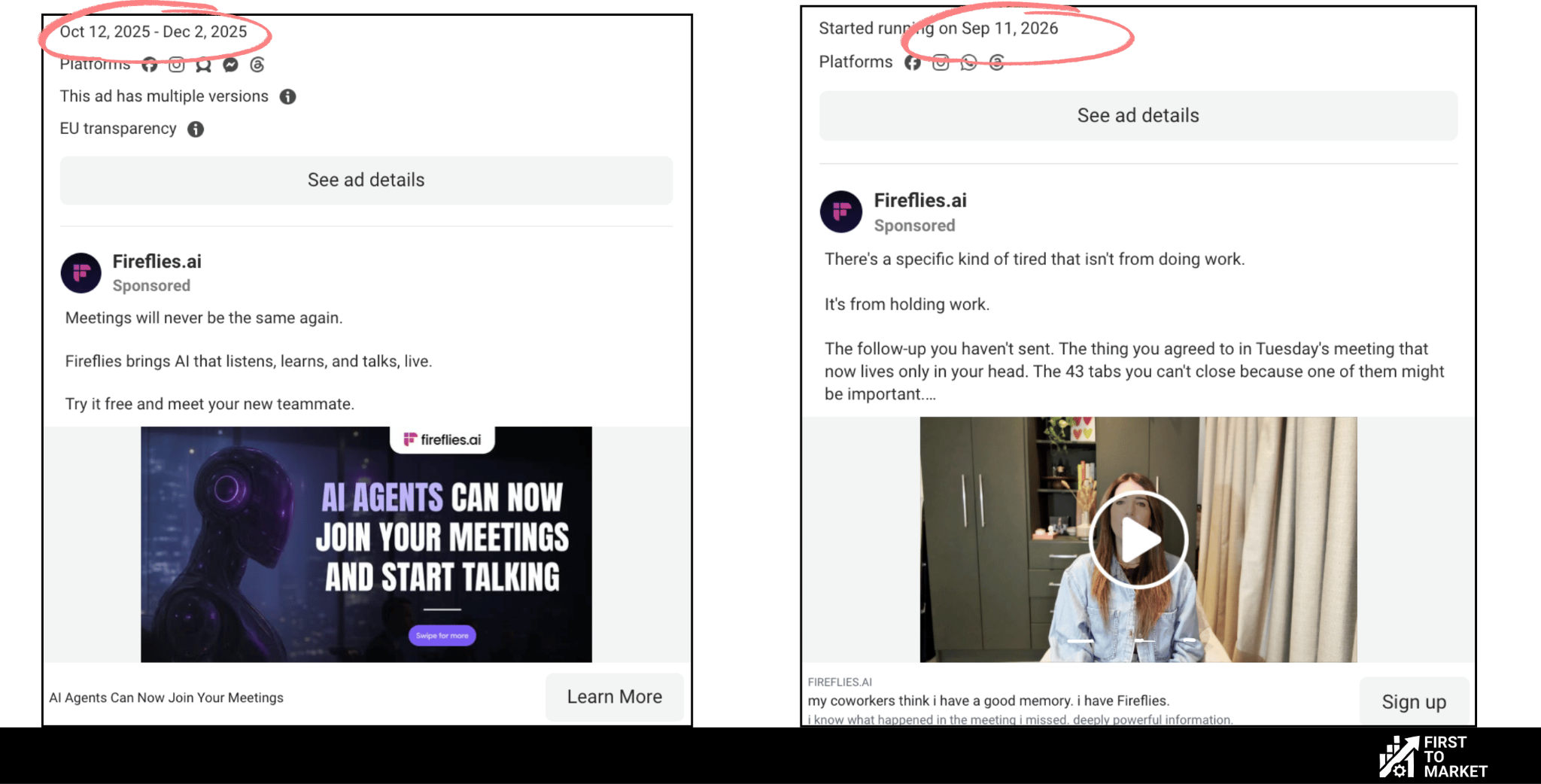
While “AI” remains part of the Fireflies tagline and “AI meeting notetaker” category, it is being replaced in the ad copy and product positioning. And Fireflies isn’t alone. Some brands even position against AI.
Lindy: “Most AI hands you a draft. Lindy hands you a finished task.”
Replit: “Consultants take weeks. Chatbots give you instructions. Replit gives you the finished product.”
Granola built its wedge on not being a “creepy AI bot.”
Here are five shifts showing up across brands in the category database and how we can learn from them.
AI Value in Plain Language
1. Don’t drop the category.
Otter still uses “AI Meeting Agent” on its home page and social profiles and has not walked away from its category to distance itself from AI. It’s changing the way that it talks about its value by focusing on what people get instead of how they get it:
“Never miss what matters.”
“Meetings shouldn’t create more work.”
“Agentic chat handles the busy work so you can handle the eating of your g-damn lunch.”
Lindy also balances being an “AI teammate” with outcome-focused messaging for a customer base that ranges from prosumer to enterprise.
“Lindy finishes the task, in the tools your team already uses.”
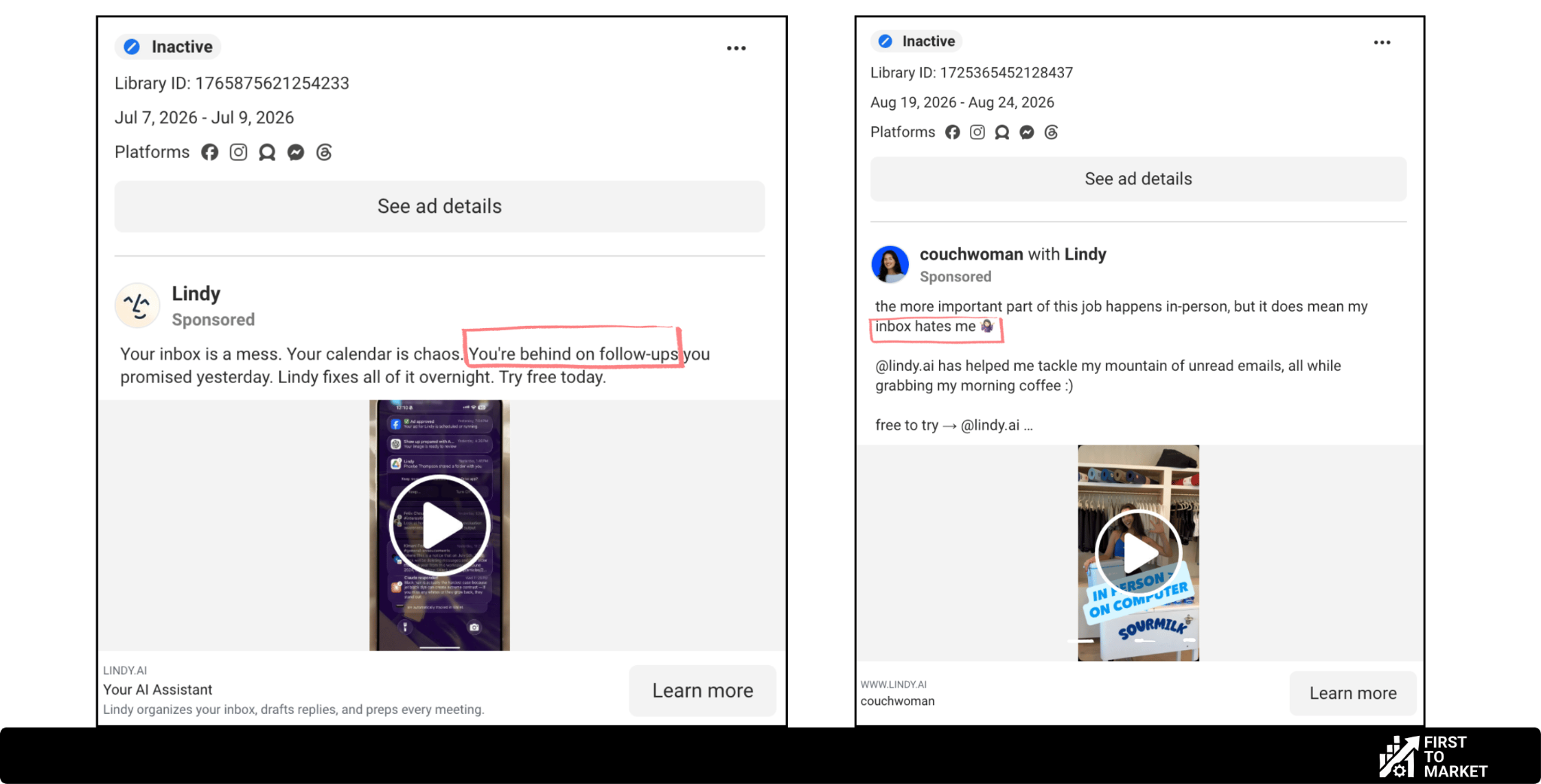
“Lindy organizes your inbox, drafts replies, and preps every meeting.”
“Ask Lindy. It’s done.”
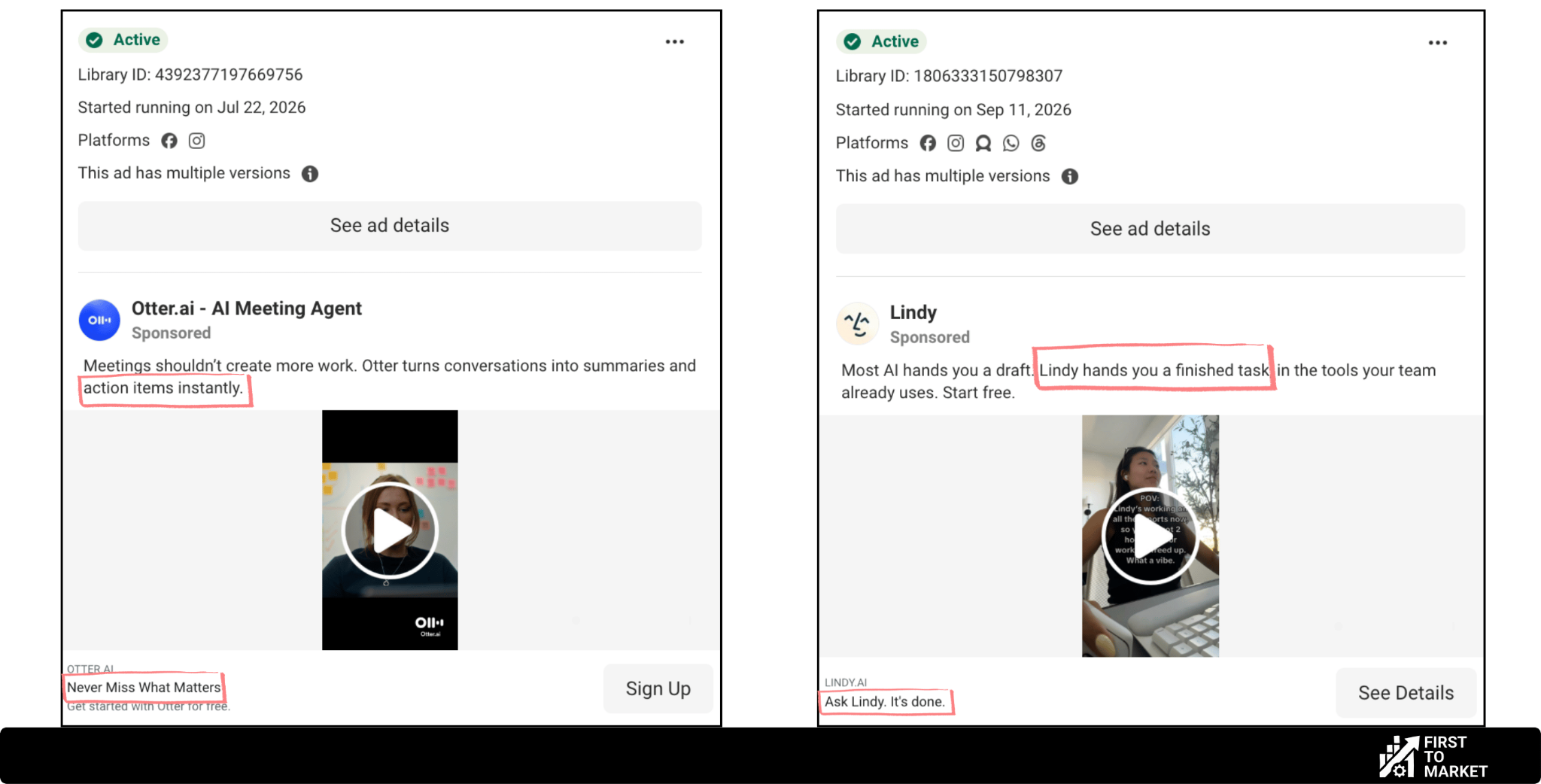
Haneen Azhar, growth marketing manager at Lindy, told me about the thinking behind it: “By nature of being an emerging category, every piece of messaging has to do two things: educate on the category, then educate on the product.” Yes, Lindy is an AI assistant, but the value that they deliver is also tangible and more than an AI label.
Common misstep: Taking it too far could lose connective tissue to your category. At one point, Otter tried to call themselves “Ambient Voice Intelligence” and that isn’t a category or a solution to any problem.
2. Replace the tech.
Cursor ads from earlier in the year shifted from “code with agents” to “Build faster” and “Run in parallel.” The underlying tech moved slightly to the background while what the tech does for the buyer moved to the foreground.
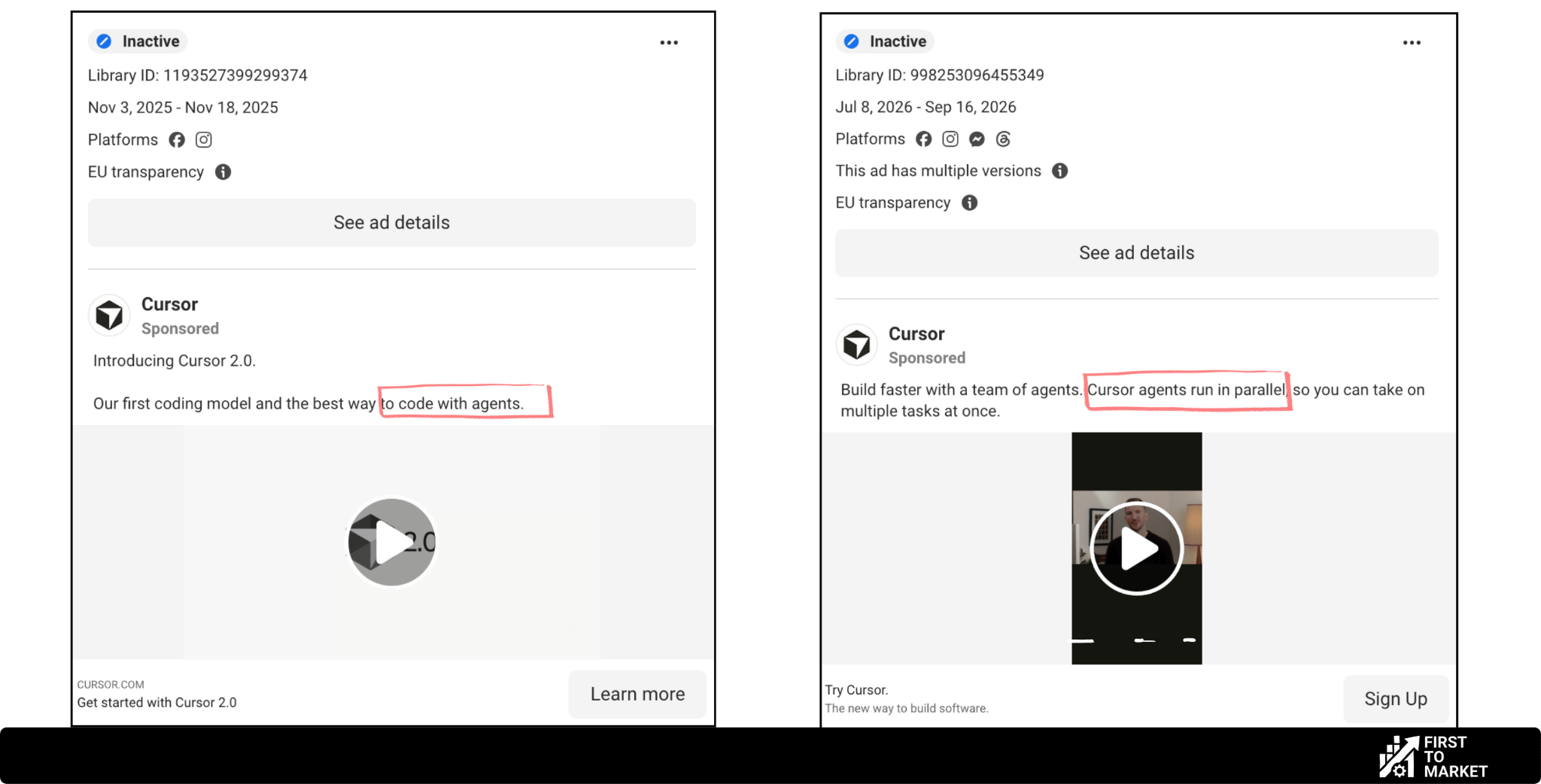
Arielle Jackson at First Round traced the transition at Cursor. “AI-first” was enough at its 2023 seed announcement. Then Claude “reframed the question from ‘what editor do you code in?’ to ‘what agent codes with you?’” and Cursor repositioned around the agent instead of the editor.
It reinforces an original tenant of marketing: people care less about the thing than what the thing gets them. The thing is just a vehicle. “The AI is an engine, not the car, and buyers just care about where the car takes them,” Jonathan Bree, CEO at Fabric, told me.
Common misstep: Don’t simply replace one piece of jargon for another. “Agent” works for Cursor because of its developer audience. But it probably wouldn’t for Fabric or Lindy.
3. Sell the relief.
The best examples don’t stop at the task being done. The messaging empathizes with how they feel.
Fireflies uses “At some point in the last few months I became ‘the person who remembers things’ at work.”
Otter quotes “I feel so chill. That’s the feeling of winning when Otter handles your meetings for you.”
Lindy tackles “The reports, the follow-ups, the small stuff that eats the week.”
Granola promises “Walk in prepared, stay in the conversation, and leave with everything that mattered.”
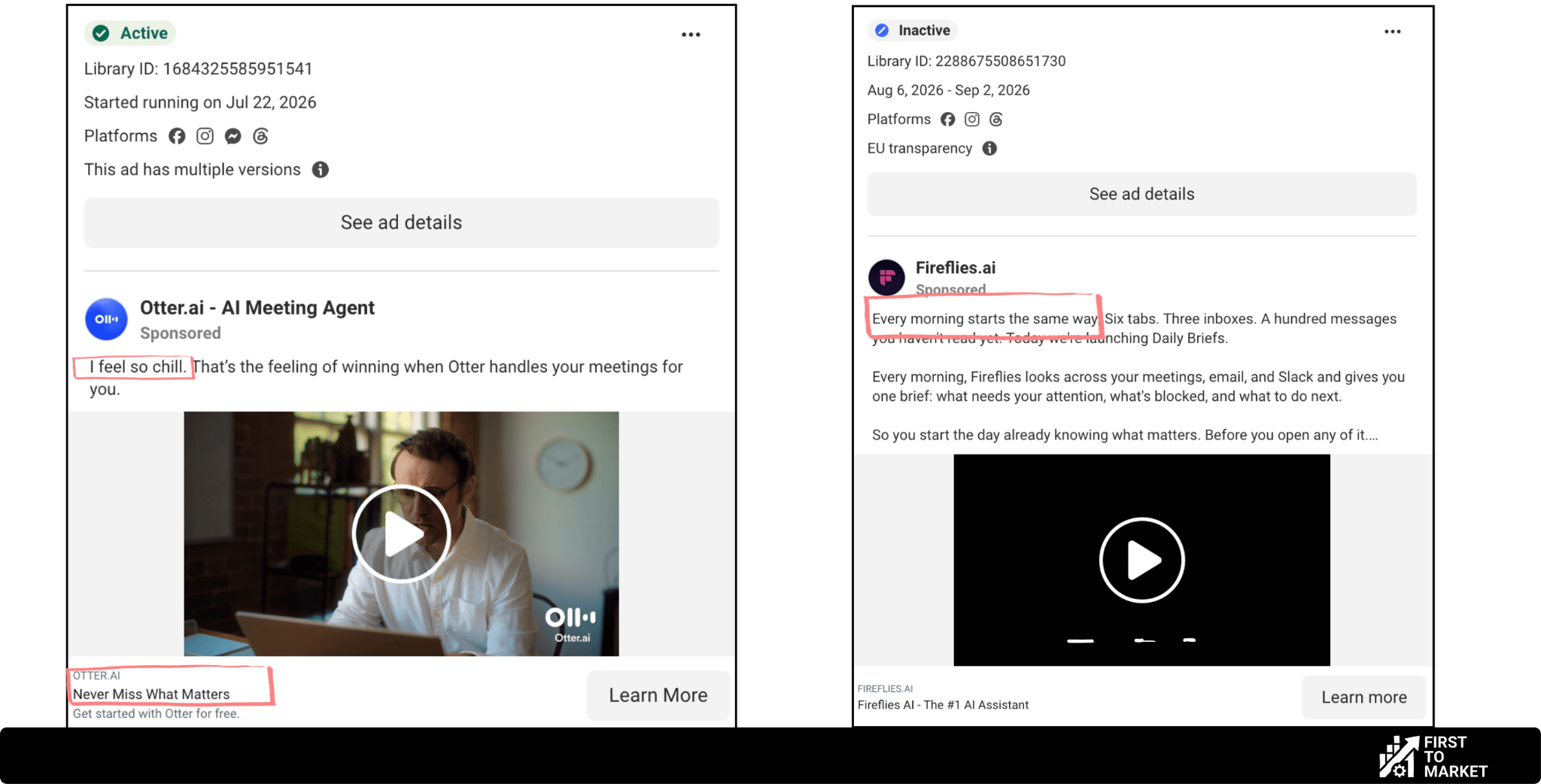
At Lindy, Haneen told me about the relief that they want their customers to feel: “There’s so much you can delegate from a voice note, a text, a Slack DM. The work starts happening and you can close your devices and go to sleep.”
Common misstep: Relief is different than productivity. For a person who is already doing a million things in a day, doing more with AI may not be the result they are chasing.
4. Give it a number.
One of the findings from the original repositioning research was that AI-native companies promised a lot, and there was a big gap between the promise and the outcome. (And we all noticed.) “AI comes with some conceptual baggage around reliability and trustworthiness, as well as a lot of overselling of capability which users have learned to not take literally,” Jonathan at Fabric told me.
Christena Argo Reinhard at Pega told me she’s “noticed some of the sparkle being dulled as leaders realize there is no magic bullet.”
The claims get smaller, the proof gets bigger:
Lindy uses ‘3x your output’ on purpose. “We’re very careful about saying this is an AI employee that will replace your department or person,” Haneen told me. “I don’t even think that’s the case.” The team is deliberate about a grounded claim rather than tossing around 10x or 20x.
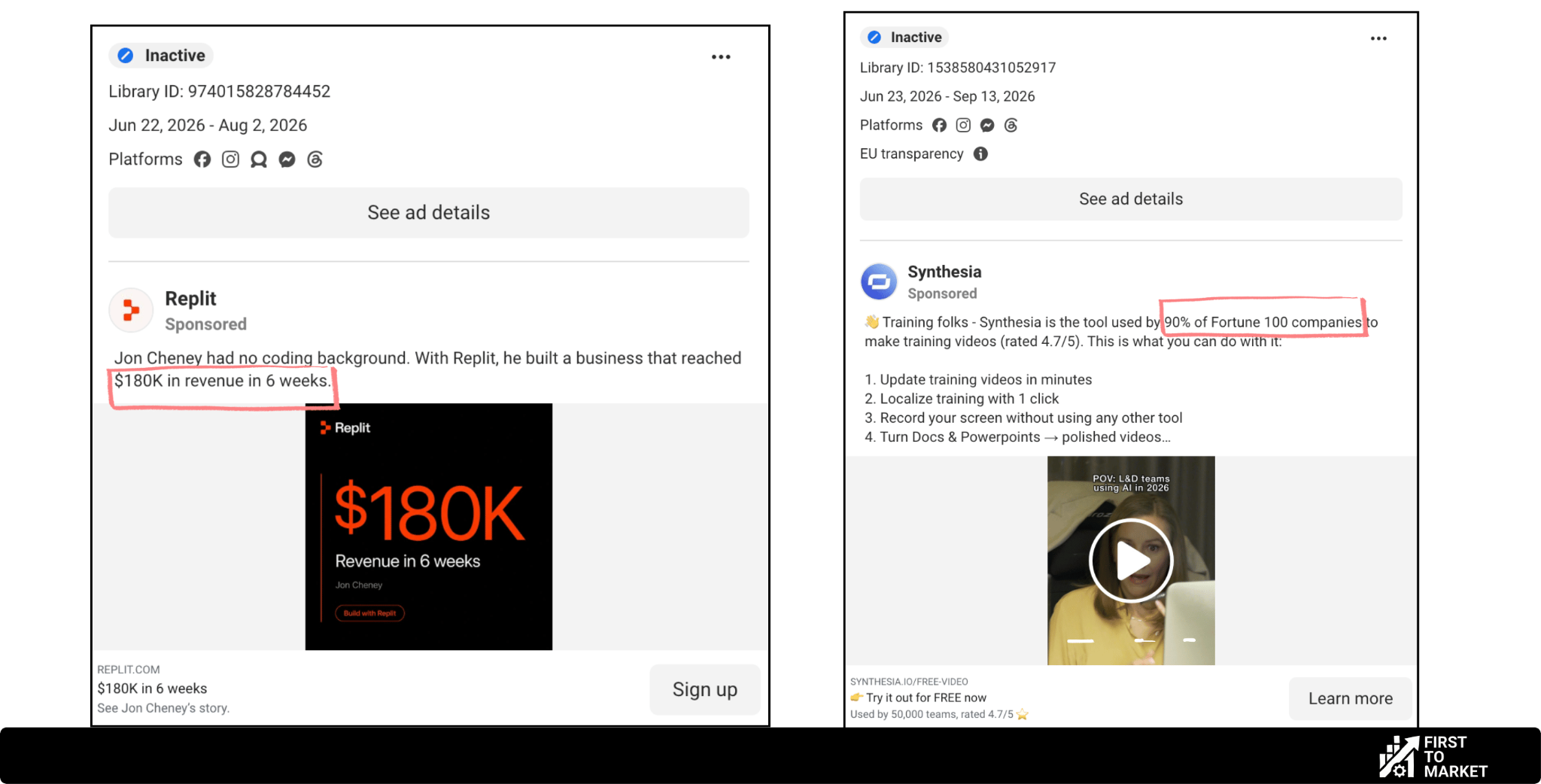
Replit ads went from “With Replit’s AI Agent, I typed exactly what I wanted” to “With Replit, he built a business that reached $180K in revenue in 6 weeks.”
Synthesia said “the biggest AI tool for training videos” in July 2025 and by June 2026 adapted to “the tool used by 90% of Fortune 100 companies to make training videos.”
Common misstep: The number is not a measure of the tech. It should measure what the buyer gets, ideally in the form of a metric that they already measure, too. (Same logic as picking a pricing unit.)
5. Focus on the problem.
Haneen at Lindy does a lot of ad testing on Meta to learn and adapt messaging quickly: “You don’t say ‘this AI agent,’ you say: ‘you’ve got a pain point, that’s email,’ and then you show work getting done. You don’t show your product UI, you show Gmail being sorted, dashboards being created. Start from a use case they’d understand, from their world.”
Jonathan from Fabric made a similar comparison to me: “We don’t say ‘we invented a new kind of knowledge system,’ we say ‘it’s like Notion but it writes itself.’” Nobody buys something just because it is “AI-powered.”
Common misstep: Problem > product. Haneen’s team found that an ad of a Gmail inbox getting sorted outperformed a screenshot of the product workflow builder, as the first one is a picture of the buyer’s actual problem.
Not Everyone Is Moving
Some of the brands I audited are leaning harder into AI over the last year:
Attio went from “a new kind of CRM” to “Ask Attio… with AI” to “AI-powered CRM.” For Attio, that’s probably still a differentiator from HubSpot and Salesforce, two brands that have publicly stumbled with AI.
HeyGen uses “AI clone” constantly in its creator ads, where someone else is attaching their human brand.
Granola has been doubling down on “AI notepad” over the past year, especially as it works to cement itself as the category leader.
I still see these as the exceptions more than the rule. As that First Round article said, “’AI-powered X’ stops being a position the second there are five credible ‘AI-powered X’ companies.” Most categories are well passed five.
I’ve got systems set up to keep tracking this into next year, when I’ll write an update. If you’ve noticed an example, hit reply or leave a comment. I’d like to see it.
From the Workbench this Week
I’ve been trying to make LinkedIn useful again. Somewhere in 15 years of accepting connection requests, my feed turned into strangers performing for an algorithm. It stopped being mutually beneficial: a place to learn from each other by sharing our experiences and lessons. (I actually think that’s part of why Substack is so popular right now.)
For LinkedIn, I had Claude sort through ~6,000 connections to unfollow 556 people who were adding noise (recruiters, ad vendors, etc.) and turned on notifications for the 100 I actually want more from. I shared the process earlier in the year and am working on it more this week. FYI: LinkedIn has been limiting how agentic tools can work in the browser so start small if you’re going to try it.
If you’re over there, connect with me. I promise not to unfollow you.
Have a beautiful weekend.