


Welcome Josh, Matt, David, Kris, Cat and the others who subscribed this week. First to Market stays free thanks to our sponsor Clarify, the full-stack AI CRM. On Dec. 9th they’re hosting a one-day conference on what’s working in GTM right now. Only 13 of the 150 seats are left so request your free spot here.
I lead marketing at a startup called Recurrent and the B2B side of our business is a sales-led growth motion. It makes sense for us because the companies that license our data are large automotive brands so there are lots of stakeholders.
The product team that wants the data
The finance and leadership teams that pay for the data
The engineering team that connects the data
Just sending the customer an API or an iFrame wouldn’t work. They need a guide and wrangler so our sales org plays that part.
But that doesn’t follow the standard GTM playbook: Start product-led (PLG) and add sales (SLG) later when it’s time to move up-market to enterprise customers. Smart people like Elena Verna and Hila Qu can explain why and our own category database backs them up: 65% of the startups that launched PLG have since added SLG motions.
All of that advice isn’t necessarily tailored to us and our businesses. In emerging categories, the data also shows that more startups start SLG on day 1, and the ones that opt for PLG actually add sales teams sooner. (Gasp)
This post cuts through all of the data. Regardless of whether you see yourself as a PLG or SLG company today, here are four questions to check your blind spots and uncover opportunities.
1. Are people looking for what you sell?
“Nobody googled ‘self-writing wiki’ or ‘personal cloud’ before we existed,” the founder of Fabric told me. That’s one challenge of a new category.
A freemium PLG onboarding works best when people already know what they want and find us with intent. I also talked about this in the AEO piece.
But that puts an extra burden on the role of a free product: it has to explain what the category is THEN convert them. Haneen Azhar, growth marketing manager at Lindy, told me every ad and landing page has a lot of work to do: “educate on the category, then educate on the product.”
Joseph Lee, CEO of Supademo, an interactive demo platform, told me that he thinks of PLG as “a really good awareness funnel” for getting people talking about the product. His customers build demos and share them, and that’s how new people find Supademo.
Data from our category database agrees based on startups launched since 2020:
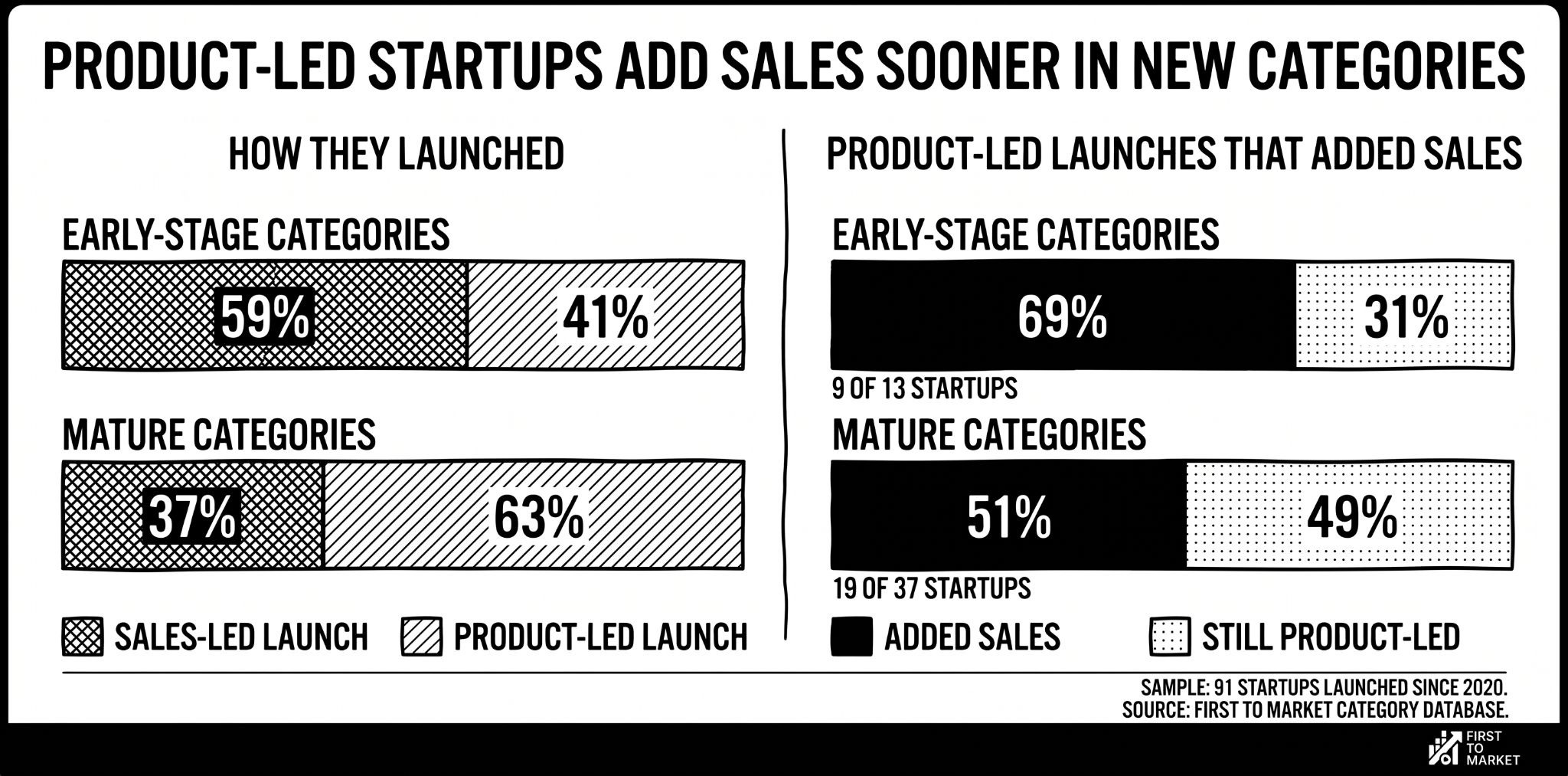
In early-stage categories, more started primarily SLG than PLG (19 vs 13).
In mature categories, it’s flipped (22 vs 37).
About 70% of PLG startups in early-stage categories have already added SLG motions, compared to 51% in mature categories.
These are small sample sizes, so you won’t see them in an academic journal any time soon, but they are big enough to be interesting.
Test it: Think about your last 10 conversations with customers. How many needed education or help understanding how you solve their problem? If it’s most of them, a free signup may not be able to deliver that on its own.
Common misstep: Don’t automatically assume that low free-to-paid conversion rate is a product problem. Presumably, a lot of free signups are people learning what the category is.
2. Who is paying for it?
In the earlier example about Recurrent, the person who wants to use our data isn’t the person who approves the contract or publishes the code.
Elena references this in her guide to adding sales: PLG works best when the end user is the purchaser and the price is low. Sales starts to pay for itself once the deal gets bigger and more people have to collaborate to deliver value to a customer.
These companies started with individuals signing up on their own and now sell to whole companies:
Otter.ai (meeting assistants) built its user base on the purest of PLG motions. But this year it has been building out an enterprise sales team to sell enterprise deals.
Notion got traction individual users and small teams. Now it’s closing enterprise deals with a sales team.
Freshworks (help desk) launched as a cheap self-serve alternative. Now it also has a sales team that sells to larger companies.
Test it: Think back to the 10 customers from Question 1. For how many did more than two people have to say yes before they bought? If it’s most of them, a free signup could need help closing those deals.
Common misstep: Don’t just hire a bunch of SDRs to dial and email and LinkedIn DM every free user in the name of “adding an SLG motion.” (And especially don’t do that if I’m one of your freemium users.)
3. Can people get value without help?
Ocean.io (GTM tools) looks PLG with a free trial on its site that gives you 50 credits. But Dennis Koopman, who runs GTM, told me that they are primarily an SLG company because customers get the most value only after connecting a CRM. His team guides that setup, analyzes the early results to cut the learning curve, and lets go only after the customer is fully running.
That’s not super uncommon. Other companies in the category database also offer a free or affordable version that requires a sales team to get most of the value:
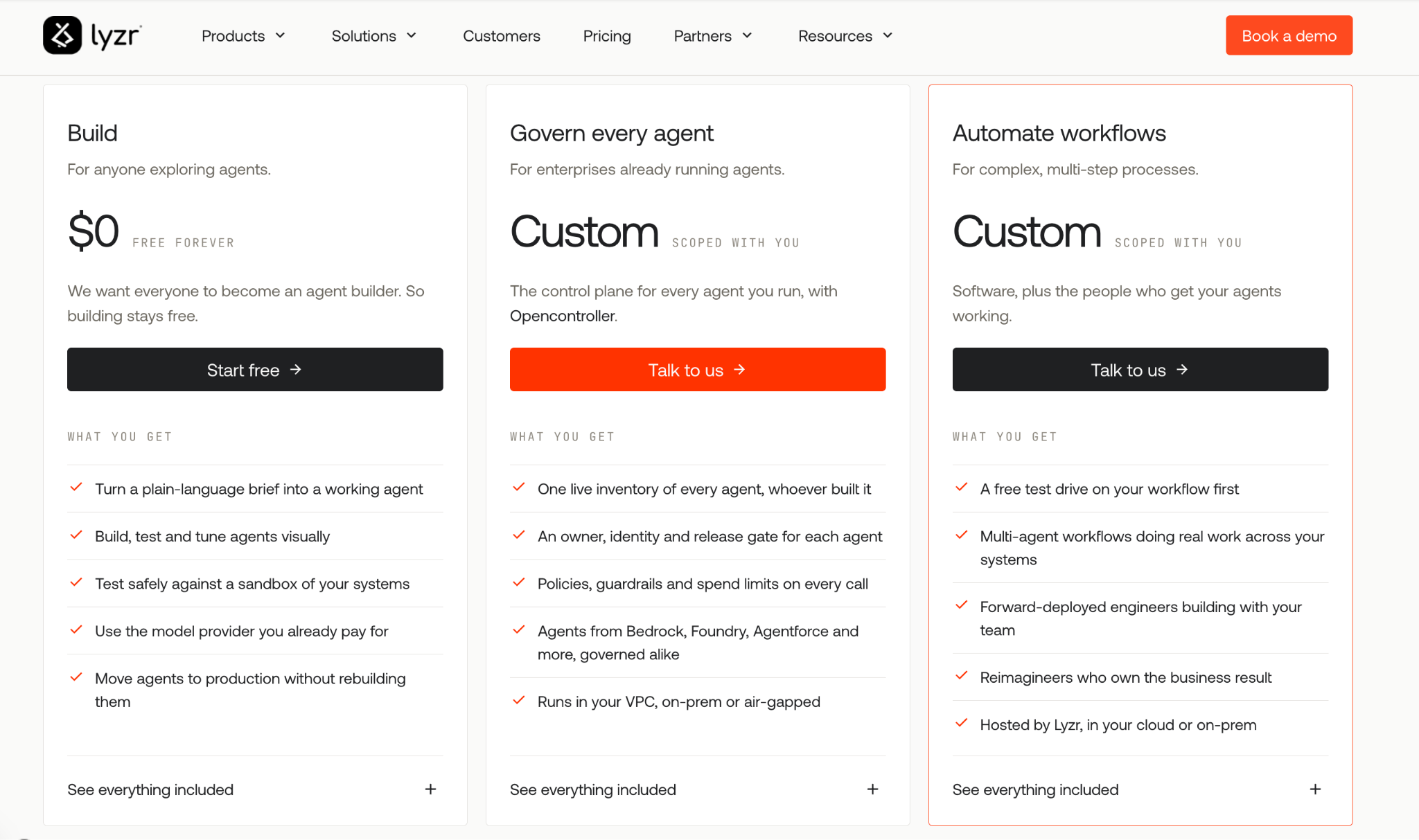
Lyzr (AI SDR) has a free plan for “exploring agents.” The others go through sales.
Blaze (marketing automation) has a self-serve tier. The managed services tiers go through sales.
Hightouch (CDP) has a free plan for basic data syncing. The core platform product goes through sales.
Test it: Think back to the same 10 customers from earlier. How many got the result they expected without 1:1 help? If it’s only a few, the help is part of what you sell so you should be pricing and staffing it that way.
Common misstep: Don’t treat the “help” as a cost to cut or step to automate with AI. If customers only get the full value after someone works through it with them, help is kind of part of the product.
4. How will you grow?
When we get into the weeds on GTM motions like this, it can be easy to lose sight of the overall objective: we’re trying to build a business that grows. That growth comes from new customers, bigger deals, existing customers spending more, etc. Our GTM motion should support how we plan to do that.
Here are examples of what I mean from a few startups I’ve talked to recently:
Supademo uses PLG because its growth comes from expansion of existing accounts: more teams and departments = more revenue and better retention.
Storylane focuses on existing customers because account expansion is its fastest-growing revenue segment.
Arcade.dev grows by winning new customers so it optimizes for speed: AI accelerates response time for every inbound lead while the person is still active and interested.
Clarify (CRM) grows with its customers, through usage and team size so its energy goes into onboarding to deliver value as quickly as possible. (More on how they do it in this recent onboarding article.)
Test it: If your revenue doubled next year, where would most of the new money come from: new customers, bigger deals or existing customers spending more? Now think about where your team spent its time last week. If those aren’t the same place, your motion isn’t built for how you grow.
Common misstep: Don’t label yourself as a “PLG company” or an “SLG company.” These are simply mechanisms for growth so you should be open to changing them as the business and category change. But that’s hard to do if the motion becomes part of your company identity.
Plan for the future
Your answers to these four questions aren’t static. Categories mature, products change, and our GTM playbooks adapt. (That’s the whole idea behind the Four Waters.)
For example, Lindy used to need its own engineers to set up its workflow product for enterprise customers. That required a mature sales org. But after introducing new agentic products for the SMB and pro-sumer market, Haneen told me that Lindy is mostly product-led with a sales team to support its tenured enterprise customers.
Of the 60 PLG startups in the database that added a sales motion, about half still lead with a self-serve option or have them both offered side by side. Also, 15 of the 88 startups that started SLG have added a self-serve tier.
Things evolve.
From the Workbench This Week
This week I started building out AEO tracking for companies in the category database. Every week it asks AI platforms the core questions for each category (”What are the best AEO tools?”) so we can see which companies are recommended in each emerging category and how that changes.
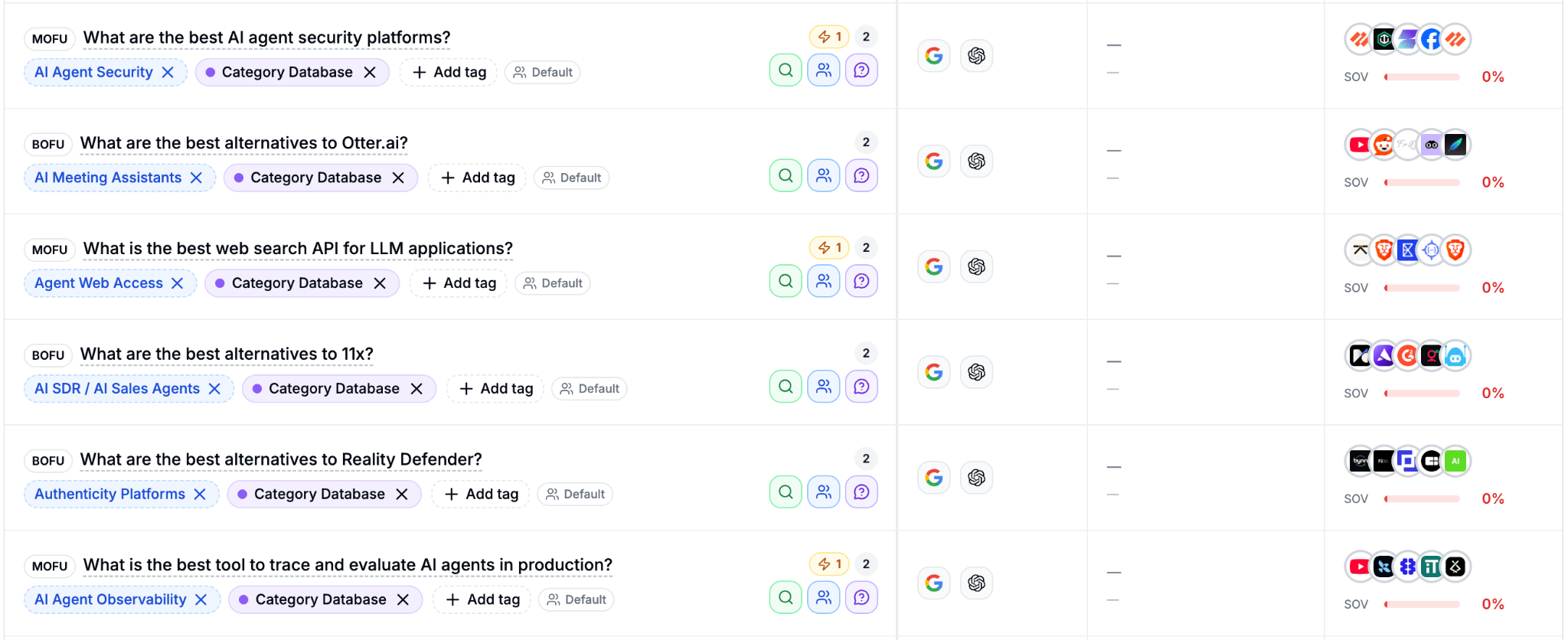
The early data is already gold. Across the same types of questions, Google’s AI Overviews cited YouTube 199 times and Reddit 76 times. ChatGPT didn’t cite either one. Its top sources were review sites like G2 and roundup articles. There will be a lot of category-specific recommendations that we’ll be able to uncover. It just needs a little more time to cook.
Have a beautiful weekend.
The guided CRM setup example gives reps a better first question: "What is stopping you getting a useful result from the trial?" That earns a conversation instead of treating every signup as ready for a pitch.