


Intent-based outbound is the #2 investment area for growth teams this year. Everyone’s buying the same tools, using the same signals and automating the same outreach.
The brands finding an edge aren’t necessarily doing it with better tools. They’re capitalizing on their proximity to the customer and how they can spot things that competitors can’t.
“I found that the biggest returns from growth actually come from a deep intuition about what will work coupled with deeply understanding your buyer,” said Brandon Camhi, former VP of Marketing at Rippling, on the GTM Engineer podcast.
That’s different than signing up for Apollo and filtering by company size.
We’re also using signals at Recurrent to drive a lot of our growth right now. The signals we track look at historical market metrics from publicly accessible data combined with signals from the executive team at prospects that show they’re ambitious and progressive with technology. Everything is technically public. All sourced with Claude Code running daily checks.
That’s the inversion.
Most signal-based playbooks are built for mature categories where buyers know they have a problem and are actively shopping for a solution.
In emerging categories, your prospects don’t know they have a problem yet. The signals you need aren’t at the bottom of the funnel. They’re at the top to identify who is likely to be receptive to education, in order to one day be in the market to buy.
Here’s a framework to help you find them.
The Signal Inversion Framework
Prospects already know they have a problem and what solutions look like in mature categories. They’re shopping. The job is to intercept them or at least become part of their consideration set.
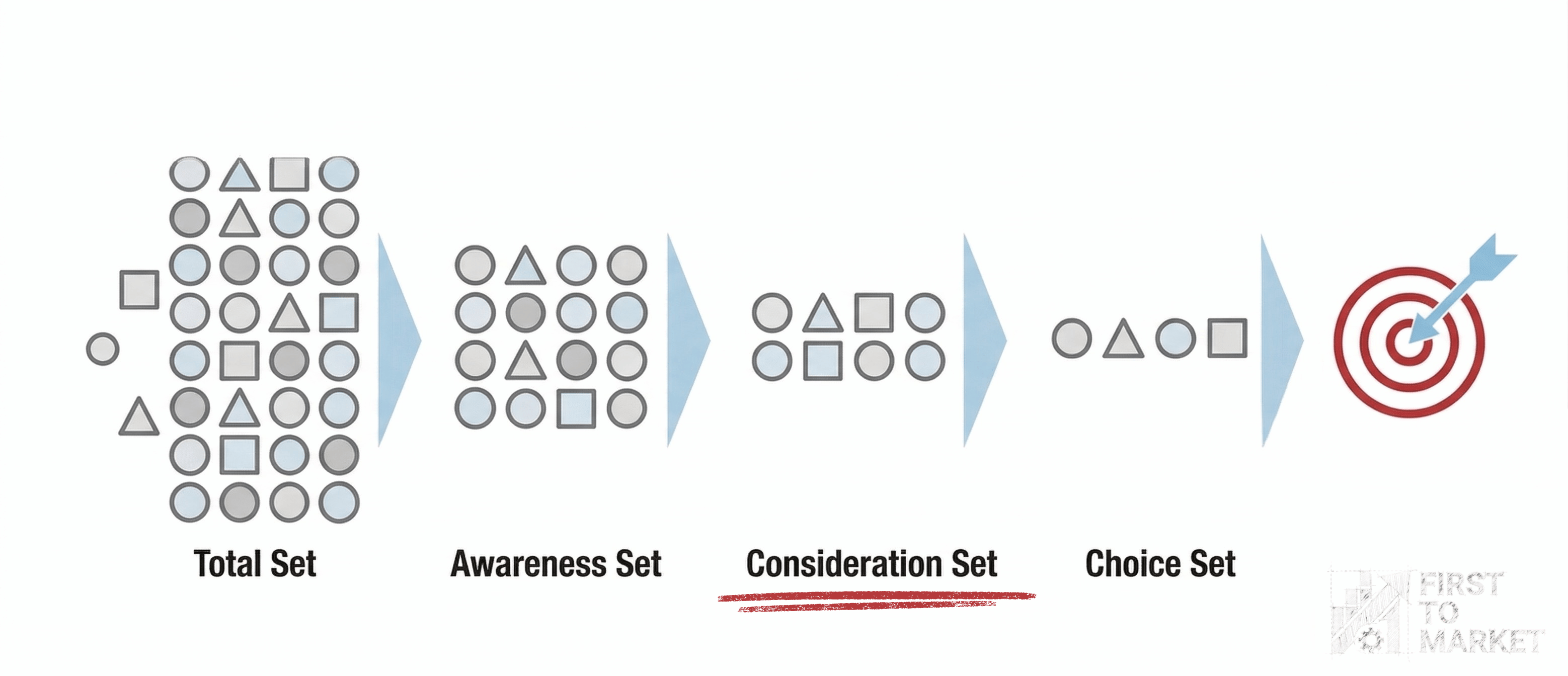
That signal doesn’t exist yet in newer categories. The prospect isn’t searching because they don’t know there’s something to search for.
That’s a much different question:
“Who’s ready to buy?” ❌
“Who’s about to have a problem they don’t know about yet?” ✅
That is the foundation of the Signal Inversion Framework. Instead of looking for purchase intent, we’re looking for the conditions that precede the problem so we can start the education process before your competitors even know the prospect exists.
1. Identify the Pre-Problem Signals
When Brandon Camhi joined Rippling, the company was doing what most startups do: blasting non-personalized emails and spending a little on paid ads. Only 10-15% of demos came from campaigns with any intent signal behind them.
A year later, that number was 60-70%. And when COVID hit and everything else went to zero, the only campaigns still producing were the ones driven by signals.
Good/bad news: the signals that worked weren’t sitting in a tool.
Camhi built Rippling’s signal engine by listening to Gong calls, talking to sales reps and studying what was true about customers before they became customers. He started from the destination and worked backwards.
You’re not looking for buying intent. You’re looking for the conditions, behaviors and situations that exist before the prospect realizes they have a problem worth solving.
The signal is not intent. It’s more like a precondition.
Test it: Look for patterns in the conditions that preceded awareness in your last 10 closed-won deals. You can include demographics, firmographics and psychographics but I’ve found that those can distract rather than aid the process. We’re looking for patterns more than criteria.
Lesson: The most valuable signals are indicators of inevitability. If X-> Y-> Z, we’re trying to solve for X.
Common misstep: Don’t confuse pre-problem signals with broader ICP criteria. “SaaS company with 200 employees” is a firmographic filter. A signal should tell you something is in motion.
2. Source Signals from Behavior
The standard data tools (Clay, Apollo, ZoomInfo) are powerful, but if you and your competitors are all pulling the same signals from the same vendors, those signals stop being an advantage.
In the best case scenario, they’re table stakes. More often, they’re distractions.
Kyle Poyar’s research reveals that intent-based outbound is one of the top investment areas in 2026. That means the signal commons is getting more crowded.
The edge comes from going up-funnel to where those platforms can’t see or don’t know what they are looking at.
At Rippling, Camhi listened to 3-5 sales call recordings every week in Gong. He discovered that:
Brand investment was systematically undervalued in attribution.
Prospects displayed similarities that were not visible in firmographic filters.
At Recurrent, our signals work similarly. We combine publicly accessible data that individually aren’t very meaningful, but together paint a picture of a prospect whose business trajectory makes our solution increasingly inevitable.
Test it: Take the pre-problem patterns from Step 1. Think beyond the obvious or readily available to answer these questions.
What kind of quantifiable data could serve as a proxy for this condition?
What combination of two or three of these, taken together, would give you high confidence that this prospect is approaching the problem your product solves?
Which investors, advisors, AI companions, vendors or distant LinkedIn connections could help you find the data sources behind these signals?
Lesson: A proprietary composite doesn’t require proprietary data. It requires proprietary thinking about what combinations of public data actually mean something.
Common misstep: Teams often build composites that are too complex to maintain or too abstract to act on. It’s better to hone in on one signal that you’d bet money on.
3. Trigger Education
In a traditional signal-based workflow, the signal causes the output: email, LinkedIn DM, even direct mail like Rippling.
Signal: Buyer is ready
Output: Tailored pitch
For those of us building in emerging categories, the signal should be saying “this person is about to encounter a problem they don’t know about yet.”
The response needs to match.
Signal: Problem is emerging
Output: Helping prospect name or recognize the problem
It’s too early for the output of your signal to be a pitch. It’s only the beginning of an education process.
Test it: Map your signal triggers to ideal educational touchpoints. “When we see [signal], the prospect sees [educational content].”
Lesson: Companies that use signals to start educating will build demand that their competitors don’t even know exists.
Common misstep: “Education” doesn’t mean a generic drip campaign. Relevance is what separates education from noise.
Building Your Signal Inversion
The intent data gold rush is real. That’s because it works for companies in mature categories with known buyers and established purchase behaviors.
But if you’re in an emerging category, the standard playbook has it backwards. We’re looking for prospective learners who, with the right information, will become buyers.
“What signals tell me who’s ready to buy?” ❌
“What signals tell me who’s about to need something they don’t know exists?” ✅
Rippling’s story is valuable because the underlying principle can be adapted for you: Success came from getting close enough to the customer to identify what preceded conversion. Only then did they go on a scavenger hunt to find data to inform the signal.
That’s a path available to most founding teams willing to do the work.
Your prospects are out there. They just don’t know they need you yet. The signal is how you find them and education is how you earn the right to help them.