


Last week we looked at the case for staying in an established category. Greenhouse tried to create “recruiting optimization” then retreated back to ATS. Marketo retreated back to marketing automation. Domo retreated back to business intelligence.
But startups do break out and create categories that stick:
Datadog unified IT monitoring into observability.
Beyond Meat added plant-based meat to the meat aisle.
We have data on why these creators were successful. Elizabeth Pontikes at UC Davis analyzed 4,500+ software companies over 12 years.
She found that new categories are most likely to stick when the legacy category is constrained, meaning buyers can consistently describe it in a sentence. For example, in the late 1990s buyers could easily define “videoconferencing.” When document collaboration emerged, the contrast was simple to spot. “Collaboration software” had the freedom to create its own category (and charge more).
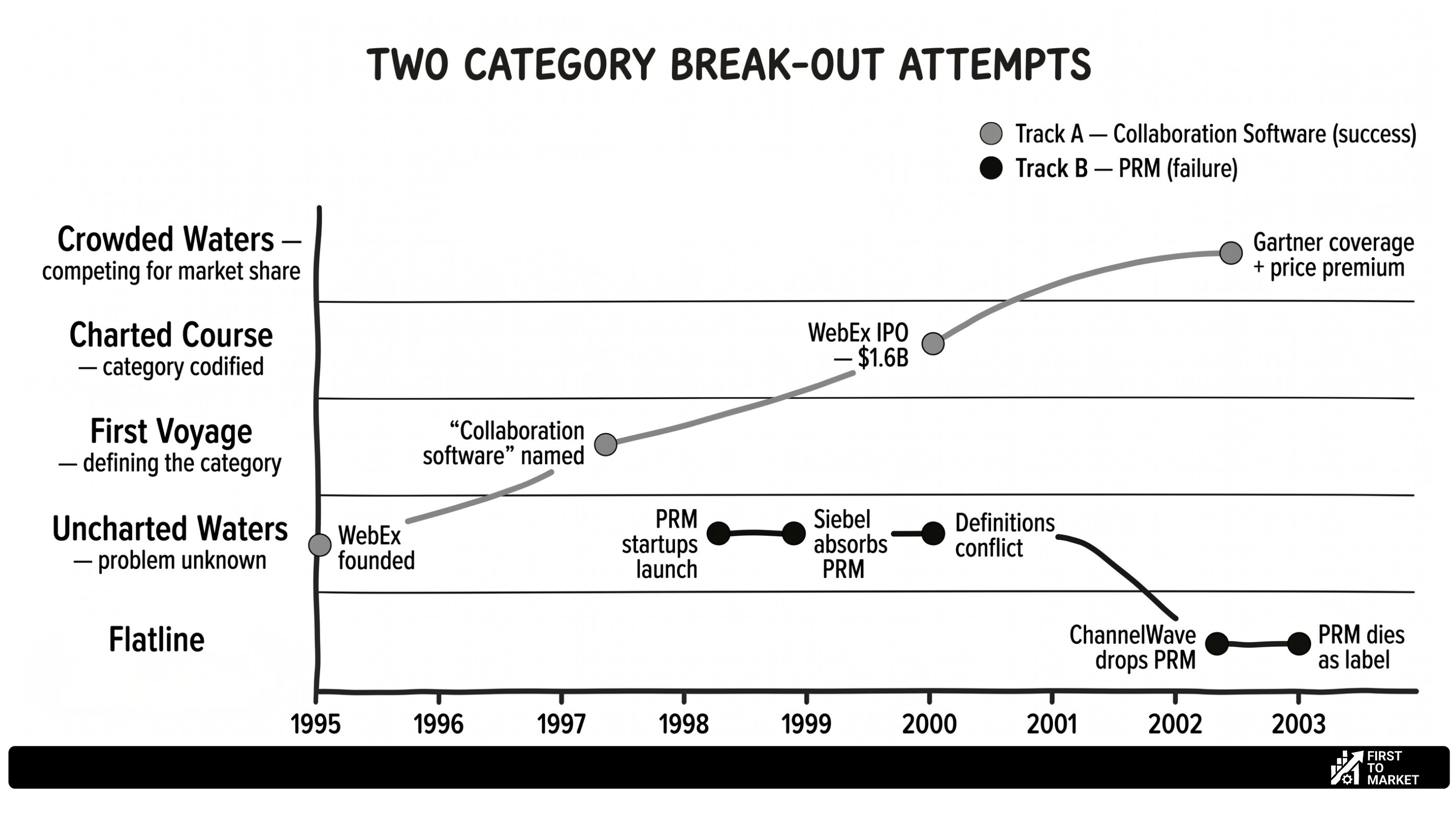
New categories don’t stick when the old one is lenient, meaning nobody can agree on what the label means. For example, partner relationship management (PRM) tried to break out of CRM. CRM was not defined enough in the late 90s so buyers couldn’t tell what CRM was or what it wasn’t. PRM had nothing to be the opposite of so it faded away.
Here’s a three-part diagnostic based on her research (and work by other academics) that you can use if you’re considering breaking out of an established category.
1. Is the old category well-defined?
Buyers can describe a well-defined category in short, simple ways that mostly match what other buyers would say. That’s what gives a new category something to be the opposite of.
Datadog had both when it broke out of IT monitoring. Engineers tracked application performance, system logs, and infrastructure health in separate, well-defined tools. Datadog’s pitch was to unify all three under what would become known as “observability.” That pitch worked because each bucket already had clear boundaries to build on.
Beyond Meat had the same advantage in veggie burgers. Shoppers had the decades of experience with veggie burgers: frozen patties for vegetarians made from beans and grain. The consistency from incumbents like Boca and Gardenburger created space to be not-that.
Compare those to “AI assistants” in 2026. Siri, Glean, Gemini’s morning brief, Microsoft Copilot and hundreds of vertical tools all go to market as AI assistants. But ask 5 buyers what makes a product an AI assistant and you’ll get 5 answers. That lacks consistency so a brand trying to break away from AI assistants will struggle to differentiate.
Test it: Google a few variants of “what is [old category]?” to look for trends. Take note of how closely the top results agree on the definition. If they don’t seem to, it may not be well defined yet.
Lesson: The clearer the old category’s edges, the cleaner your break-out can be noticed by buyers.
Common misstep: Don’t confuse your own clarity for the buyer’s. You live in this space and they may only think about it once a year.
2. Can buyers tell you what it’s NOT?
A more reliable signal can actually be what buyers say the category isn’t.
When Beyond Meat launched, they designed it to be easy to see what it wasn’t: a frozen Gardenburger disk. They put it in the meat aisle, gave it beef-section pricing and packaged it to look nothing like a freezer-aisle veggie burger. Having a confident “not-that” helped plant-based meat land as a category.
Datadog could pass a similar test with its niche audience. By the late 2010s, engineers could tell you observability wasn’t just application performance or system logs or infrastructure health. Each piece had clear edges, which is what let observability sit between them.
Run the same test on AI assistants. Ask buyers what isn’t an AI assistant. Is a copilot one? Is an LLM chatbot one? Is a workflow tool one? The boundaries don’t exist to push against for most users.
Test it: Ask prospects what else they are considering. Their answer will tell you how well-defined the old category is.
Lesson: A new category lands when buyers can confidently tell you what it isn’t.
Common misstep: Don’t take “we don’t know what to compare you to” as a compliment. It can mean the old category is too blurry to anchor a new one.
3. Where will the money come from?
A new category doesn’t invent a budget from thin air. Successful creators identify a specific funded pool to siphon from, and position themselves so drawing from it feels obvious to the buyer.
In B2B, those pools are lines in the budget. In B2C, they’re stable household buckets and retailer shelf space. Fuzzy categories are the ones with no obvious place to point, which is why your new category can’t pull money from them.
Datadog’s pitch wasn’t “fund a new observability budget.” It was “consolidate 3 budgets you already have.” Datadog used the gap between those funded buckets to pull money from all of them. Today, “observability” is its own line item, but only because the older categories it absorbed were funded first.
For Beyond Meat, the veggie burger share-of-wallet was tiny when nested in the frozen food section. Especially compared to the amount that the average household spends on meat each visit. Beyond Meat’s pitch to grocery stores was about getting placement in the meat aisle, which meant accessing a much larger share of the grocery receipt. That shelf placement became the budget signal. Now other large players have launched their own plant-based meat lines to codify the placement and category.
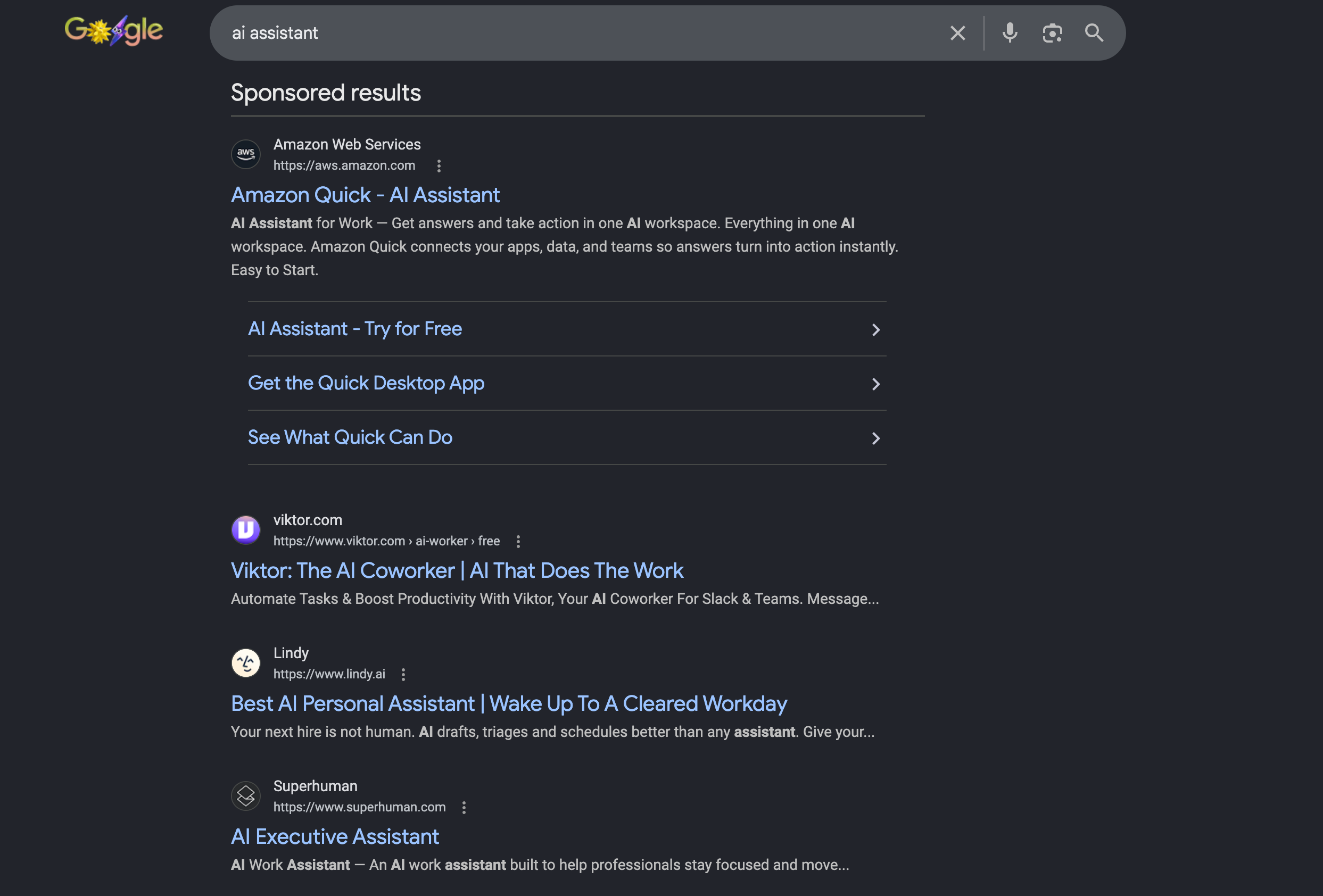
AI startups are seeing this right now. Vendors are bidding on “AI assistant” keywords, but the ads are positioned different ways for different buyers. The category hasn’t settled.
Test it: Ask prospects what they are replacing with your product. Their answer will tell you if your siphoning hypothesis is resonating. If they can’t, your product cost may not find a budget to support it.
Lesson: New categories that stick pull money from well-defined categories that already had funding.
Variables You Can’t Control
Pontikes’ direct advice to founders: “No matter how new your technology is, if the categories around you aren’t well-defined, it’s going to be hard to position that product as something new. You’re probably better off saying that you’re exactly like what the other guys are doing.”
Most founders evaluate this decision by looking inward at their product, team or underlying tech. But it’s the shape of the old category (a variable you can’t control) that influences whether your new positioning lands.
Together with last week’s salvageable test, the two-part question is structural before it’s creative:
“Should we try to create a new category?” ❌
“Is the old category settled enough for a new label to make sense?” ✅
The good news is that fuzzy categories don’t stay fuzzy forever. They clarify as buyers form expectations and labels become consistent. Until then, patience and language discipline may be the best move.
For now simply figure out which side of that line you’re on.
This was so helpful! Thank you so much.
Beyond Meat aligning with incumbents reminds me of luxury retailers, or even whatever category retailers, all opening locations near one another. Customers assume they're similar. It's fun to see how this plays out online. It's hotelling's law of spatial competition, had to look up the name.