


Greenhouse originally tried to build a new category called “recruiting optimization.” Former marketing VP Barbra Gago shared the story several years ago on Lenny’s Podcast:
They tried it.
It didn’t stick.
They quickly retreated to an established applicant tracking software (ATS) category and became a leader.

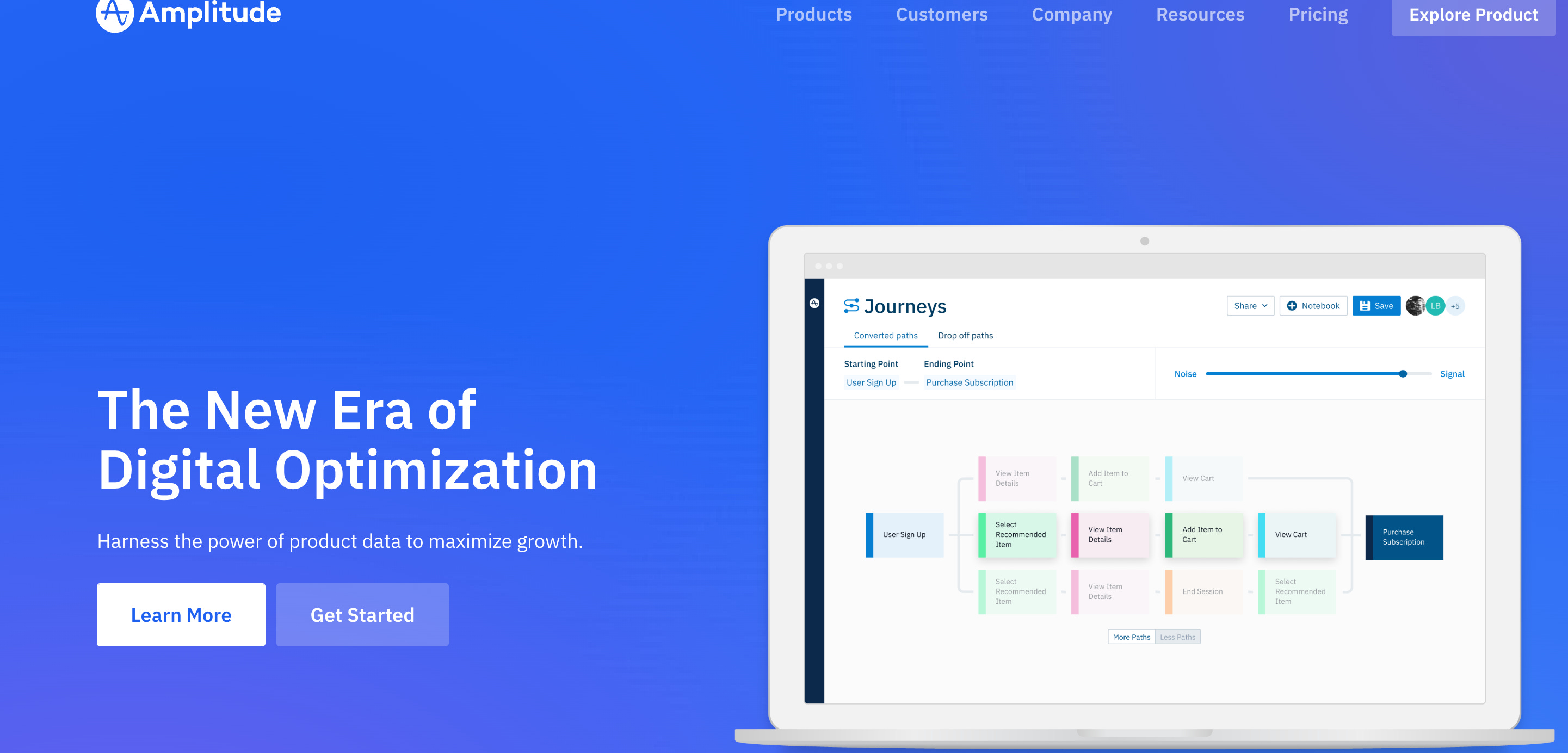
Greenhouse isn’t unique. Marketo tried to make “revenue performance management” a category until going back to marketing automation. Amplitude pushed “digital optimization system” then quietly went back to being an analytics platform. Domo pitched itself as a “business cloud,” but never made it out of the business-intelligence umbrella.
For B2B products in particular, it’s a structural problem: it’s easier to tap into an existing budget line item than ask customers to add a new one. Plus, when you abandon a category to invent one, the competitor who stays often absorbs the budget that you left behind.
The penalty for not fitting into a category is well documented by economic sociologists. Markets discount companies that don’t cleanly classify, and buyers devalue products that straddle two categories instead of picking a lane. More on that later.
This is a two-part series on the decision to revive or abandon an existing category. In this first part, we’ll use Greenhouse (and a few others) as examples for grading the potential of an existing category. Next week, we’ll flip it: the startups that ran the same test, got to “no,” and built a new category instead. Both parts share practical lessons from brands you know and what you can borrow.
The Salvageable Category
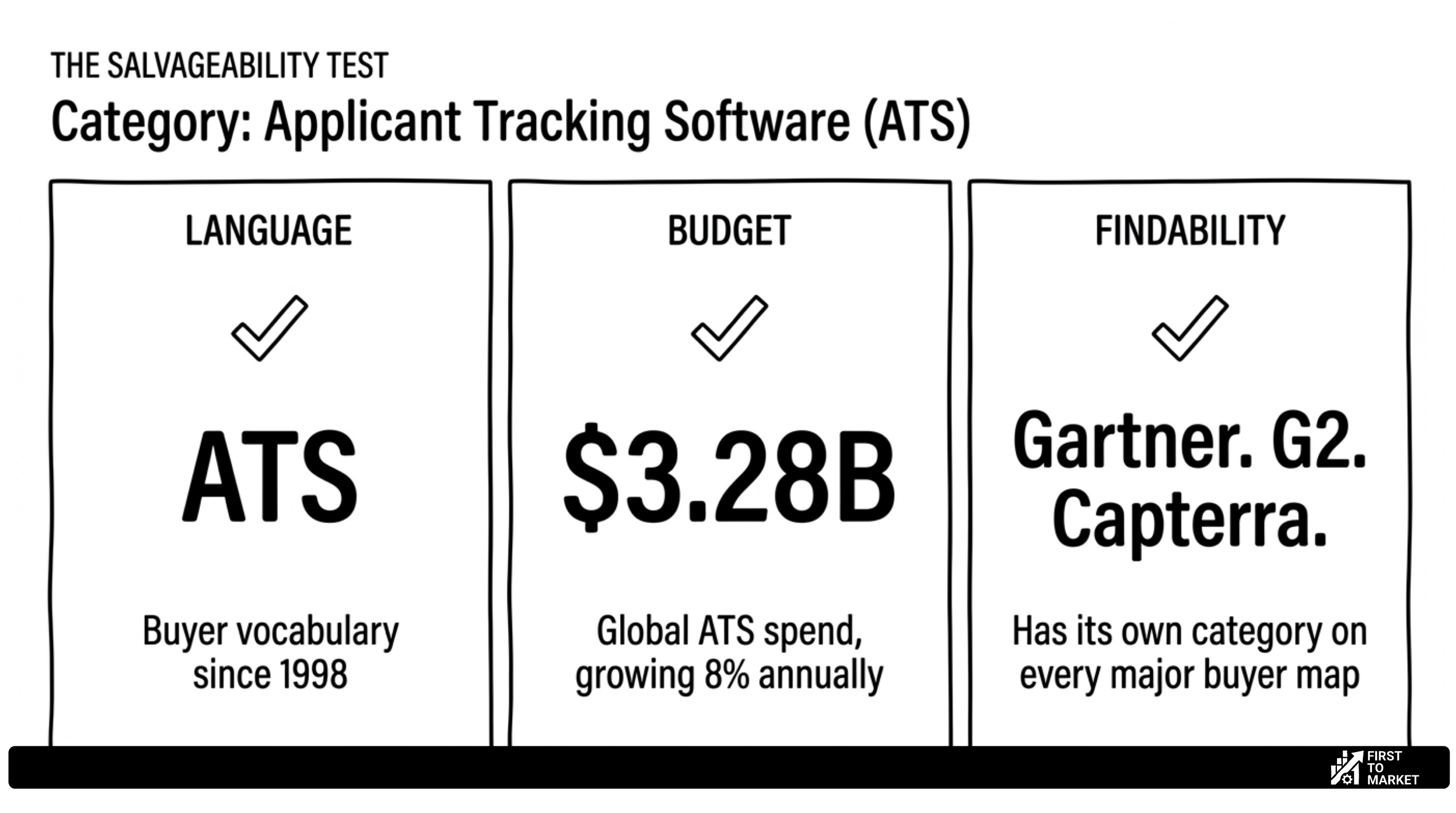
Under-served categories tend to reward modernizers: a startup that adopts the existing language then sets a new bar for customer expectations. Here are three ways to test if your category is salvageable with questions on whether its buyers can recognize it, fund it and find it.
1. Do buyers describe their problem in the category’s words?
You already know this from your last five sales calls. Hearing prospects say “we need a better ATS” or “our CRM should be smarter” demonstrates that the category’s language is functioning and helping buyers align solutions to their problems.
Greenhouse heard recruiters say they needed a better ATS and could not get them to disassociate that need with the established category.
HubSpot heard the opposite. Marketers told them that outbound was broken and lead generation didn’t work. Hubspot’s approach of using content + SEO to drive demand didn’t have a clean name, and the category label actively misled prospects. That mismatch made their inbound marketing label defensible.
The lesson: It’s difficult to replace the language that your buyers actively use.
The misstep: It’s possible to confuse ‘tired’ category language for misleading language. One is a copy problem and the other is a category problem.
2. Where does the money come from?
The money for products and services has to come from somewhere. For a company buyer, that’s a line in a budget, or even a specific RFP template or procurement code. For an individual buyer, it’s a mental bucket for “groceries” or “vacations” or whatever.
Those budgets are organized by category so a new category asks the buyer to remodel their budget. That’s a big ask:
Understand the value of this new product.
Assess my current budget.
Create a new line item.
Move money from something else to fund it.
While that exercise may take a split second for a high-income family in the checkout line, it could take years for a large organization.
Greenhouse found that customers and prospects had an ATS budget and it was growing over time. Decision makers and procurement teams could write the check from it without going to finance. That was the single strongest signal to stay.
Test it: Ask prospects how they are funding the purchase. You’re listening for whether you are slotting into a line item they already have or they’ll have to create one.
The lesson: If your product can fall into a budget line that already exists, the category is doing the funding work for you. If it doesn’t, you’ll need to sell both your product and their budget reorganization.
The misstep: Don’t get a positive response to the vocabulary you test in the previous step then automatically expect the budget to follow. Money moves slower than words.
3. Can buyers find you?
Our product research and purchase decisions are shaped by existing categories more than most people realize.
Google serves us Wirecutter listicles on product categories.
ChatGPT builds its answers from analyst reports and category Magic Quadrants.
Amazon’s menu is organized by categories.
The App Store sorts by categories.
The systems that we trust to help us shop are organized into categories that already exist. If you don’t fit into one, you’re invisible to prospective buyers and have to generate each ounce of awareness by yourself.
Economic sociologists even have names for it. Ezra Zuckerman calls it the categorical imperative: firms that don’t fit a recognized category trade at a discount because confusion about what they offer depresses demand.
Greenhouse found that the infrastructure for discovery in ATS was too valuable to ignore. There was a Gartner quadrant, a G2 grid, listicles, reviews, subreddits. Building their brand in ATS would not be easy, but it concentrated all of their marketing efforts in familiar places.
It’s more complicated when I talk to AI startups that don’t cleanly align to an existing category. That tempts founding teams toward “we have to create the category.” By the end of our discussions, we often align on a playbook that is more similar to Greenhouse: Picking an established category to modernize as an awareness and distribution shortcut.
The lesson: Existing category maps aren’t the only way buyers find products, but they are the easiest. Slot into one and the category does the discovery work for you. Skip it and we’ll be doing that work ourselves.
The misstep: Don’t grade findability from a biased sample of customers that already know you. We want to know how new customers will discover our solution to their problem… at scale.
One Thing This Doesn’t Measure
This test doesn’t measure whether you can win. You could breeze through all three questions and still abandon the category because an entrenched incumbent already owns the modernized version.
Salvageable is not the same as winnable.
Winnable is a separate question with its own signals (e.g. defensibility, distribution, switching costs) and it’s big enough that I’ve earmarked several posts for it later this year. For now, this salvageable test answers the prerequisite: Is the category even a viable home for what I’m offering the market?
It’s Only the Beginning
A lot of category creation advice treats the decision as largely creative: the right name, the right positioning, the right story. From my experience, it is more of a structural decision: existing language, budget, discoverability.
“Should we try to create a new category?” ❌
“Is an existing category serviceable?” ✅
Everybody knows the big winners like Salesforce and Snowflake so we need to be careful making decisions based on survivorship bias. Most of the startups that tried to mint a category got buried and lost to time.
Hubspot left and Greenhouse stayed. Both made the right decision.