


Bundling products or services is one of the best ways for incumbents to pad profit margins. Glue together a bunch of offerings into a single package, set one price, and promote the features instead of the total cost.
This strategy is all around us.
If you want ESPN, Comcast sells you “TV Plus” with 125 other channels.
If you want Excel, Microsoft sells you Office 365.
If you want a power liftgate, Chevrolet sells you the Premium Package.
Once companies can make the bundle an industry standard, the features start to belong together in the minds of buyers. It creates the illusion of choice without the reality of control.
Direct-to-consumer vs Unbundling
New entrants tend to compete against bundled offerings in two ways.
1. Going direct-to-consumer competes on cost by cutting out middlemen, reducing retailing expenses, and optimizing supply chains. These are great strategies, but they’re still playing in the incumbent’s category.
Warby Parker cut optometry retail markup, but they’re still selling prescription glasses.
Dollar Shave Club removed distribution costs, but they’re still selling razors.
2. Unbundling removes value that customers never wanted in the first place. It’s not just removing costs, it’s letting customers pay for less.
Slack made communication a stand-alone product.
Figma let people design without the Suite.
These products abandoned the incumbent’s category to create their own. Now we’re seeing this play out with electric trucks.
Ford (incumbent) and Rivian (DTC startup) were the first to introduce electric pickup trucks in the US. Both launched with premium models at premium prices. These original models were incredibly expensive to manufacture so the companies offered fewer bundled tiers with more luxury features to protect product margin.
Big screens, more cameras, greater automation, massive batteries, higher prices.
Enter Slate and unbundling to create a new category in the vehicle market, rather than simply a product variation.
How Slate Made Subtraction the Product
The tactical execution of unbundling a product category creation requires more than just offering options. It requires repositioning the entire purchase decision.
Slate is launching as a $20-something-thousand electric pickup, but it isn’t positioning itself as a cheaper version of what already exists.
It is creating a configurable vehicle. While incumbents and DTC startups ask which package (trim) you want, Slate asks: “What do you actually need to get from here to there?”
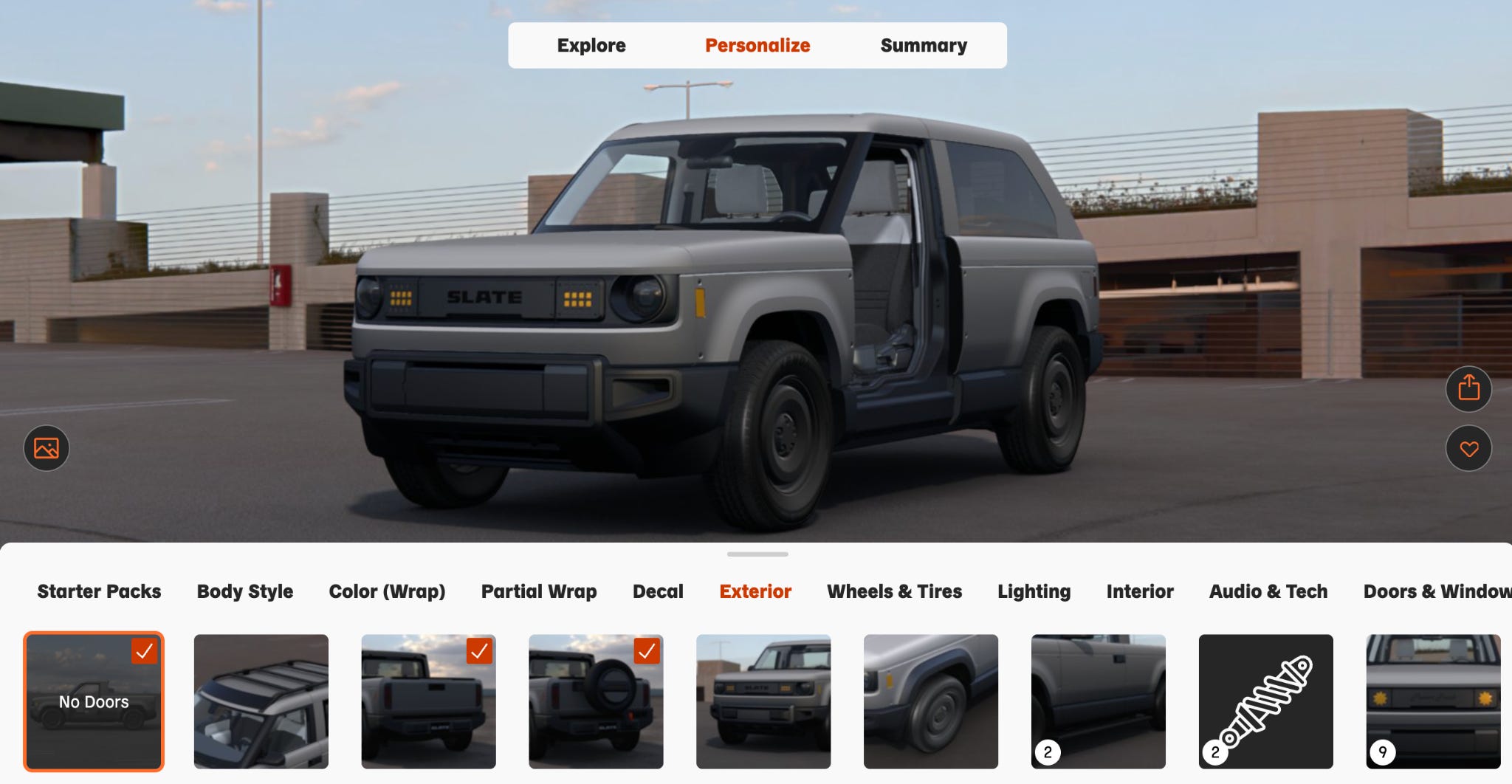
Other than four wheels, seemingly everything else is modular and optional. No screens, no autopilot, no air suspensions.
Often the “build your own” experience is designed to increase average transaction price and Slate is attempting to invert this psychology.
Their configurator is designed to help customers find their minimum viable vehicle. It’s a message that asks “what can we remove so you’re only paying for what matters?”
While other electric trucks compete on features and price, Slate carves out a new axis: personalized versus predetermined. And once you’re competing on different terms, you’re no longer in the same category.
Slate (and Slack and Figma, from above) identified forced bundling and gave customers permission to reject it.
Finding Unbundled Category Opportunities
Not all unbundling creates categories. Sometimes it just creates SKU variations or cheaper alternatives. The difference comes down to whether you’re changing what customers are buying or simply how much they’re paying.
Category-creating unbundling happens when several conditions align:
The incumbent’s bundle is protecting margins rather than delivering value. In other words, the bundle costs customers more than the sum of its parts would cost separately.
New audiences would enter the market if they could buy less. These potential customers choose ‘nothing’ because the bundle cannot deliver a positive ROI.
The unbundling creates new behaviors rather than the same behaviors at a lower cost. It’s a subtle distinction that separates product category creation from price competition.
Here’s how to identify if your unbundling opportunity meets these criteria:
Map the incumbent’s standard packages and ask which features do customers consistently question, negotiate away, or complain about paying for?
If the answer is “none,” it is likely a healthy bundle.
If the answer is “a couple,” you might have a product variation opportunity.
If the answer is “many,” and those features represent 30% or more of the package price, you have a category creation opportunity.
Then calculate the cost delta. What would the product cost if customers could exclude unwanted elements?
If the answer is 20% less, you’re looking at a pricing strategy.
If the answer is 50% less, you’re looking at a potential new category.
Slate’s unbundling suggests they can deliver an electric truck for less than half of a Rivian or Ford. It’s not because their trucks are cheaper to make, but because luxury features are expensive to include.
Finally, test if your unbundling enables new customer behavior. Ask potential customers: “If you could get X without Y, what would you do differently?”
If they answer “buy it cheaper,” you have a pricing opportunity.
If they answer “buy it without a doubt,” you have a category opportunity.
Building Your Unbundling Strategy
Positioning unbundling correctly means framing it as philosophy rather than economy. This is where many unbundling attempts fail. Founding teams lead with price and immediately position themselves as the budget alternative.
This triggers loss aversion.
Customers wonder what they’re giving up and why the incumbent’s bundle exists in the first place if these features aren’t valuable.
Instead lead with control and dignity of choice. Slate doesn’t say “we’re affordable electric trucks.” They are selling choice.
Basecamp doesn’t say “we’re cheaper than Jira.” They say that project management software shouldn’t require a training manual. The framing positions the incumbent’s bundle as wasteful or presumptuous, not premium.
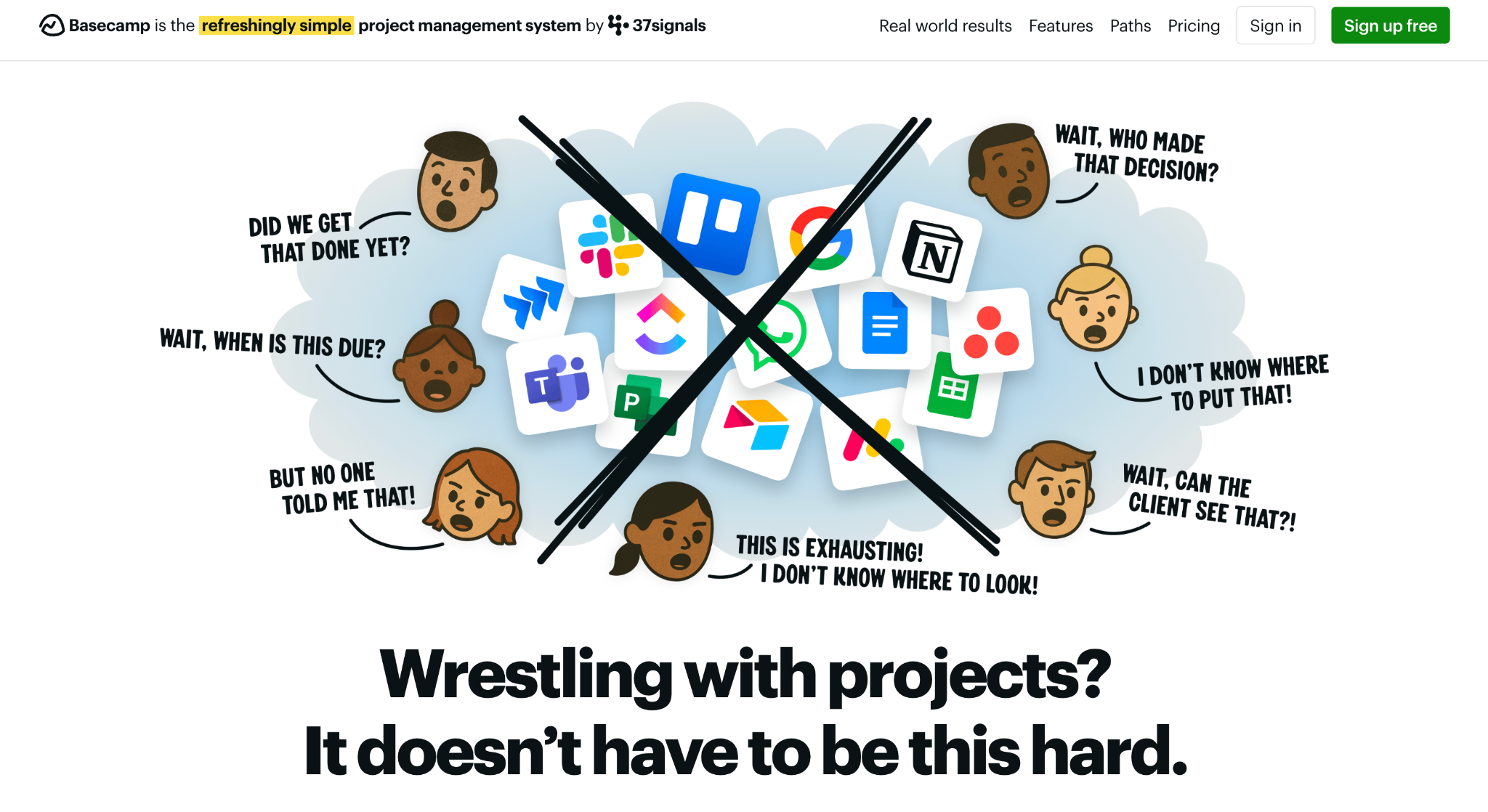
You’re not the cheap alternative. You’re the respectful one. This is psychologically powerful because you’re giving customers permission to reject industry orthodoxy:
You’re validating a frustration they already felt… but couldn’t articulate.
Margin sustainability is the other unbundling killer. When you remove bundled features, you expose your unit economics. You need a path to sustainable profitability beyond just volume:
Operational efficiency that incumbents can’t match
Willingness to serve market segments that incumbents ignore
Eventually upselling your own value-added services
#3 is Slate’s likely path. They’ll start with radically unbundled vehicles to establish the category and build customer relationships. Once customers trust the brand, they’ll introduce more “popular configurations” and value-added services (maintenance plans, software features, charging solutions) that generate margin beyond the base vehicle.
The trap to avoid is recreating the exact bundles you disrupted.
If Slate eventually offers trims that look identical to Rivian, they’ve lost their category positioning. But if they offer “Cyclist Bundle” or “Contractor Package” that bundle features specifically for those use cases, they’re evolving in their category rather than abandoning it.
The Unbundling Assessment for Your Category
If you’re exploring whether unbundling could create a category for you, start by documenting your competitors’ standard packages in detail.
List every feature, service, and element that customers must accept to purchase.
Interview potential customers and ask them to mark which elements they’d voluntarily pay for and which they wish they could exclude.
Calculate the true cost of forced bundling for customers. Take the competitor’s average transaction price and subtract what the product would cost if customers could exclude unwanted elements.
Test your positioning with potential customers. Ask: “What would this let you do that you can’t do today?”
Model your margin sustainability path.
Consider your re-bundling roadmap. Decide which features you’ll never bundle, which you might bundle later, and under what conditions.
Never Forget Dignity of Choice
My best insight about unbundling for category creation isn’t really about features or pricing. It’s about displaying respect. When incumbents bundle everything together, they’re making decisions for customers.
But don’t discount how convenient bundling can be for buyers.
Example: I always buy a sandwich from the menu rather than the “Build Your Own” option. I want the tried-and-true combo that earned its spot on the menu.
Slate’s real innovation isn’t modularity or affordability. It’s telling electric truck buyers: “You don’t have to accept the industry’s definition of what an electric truck should be. You can choose what matters to you.”
That’s essential to keep in mind. The category you’re creating isn’t really about the product. It’s about who gets to decide what value means. Once you return that power to the customer, you won’t be competing in the old category anymore. You’ll have created a new one.